Our Curricular Philosophy
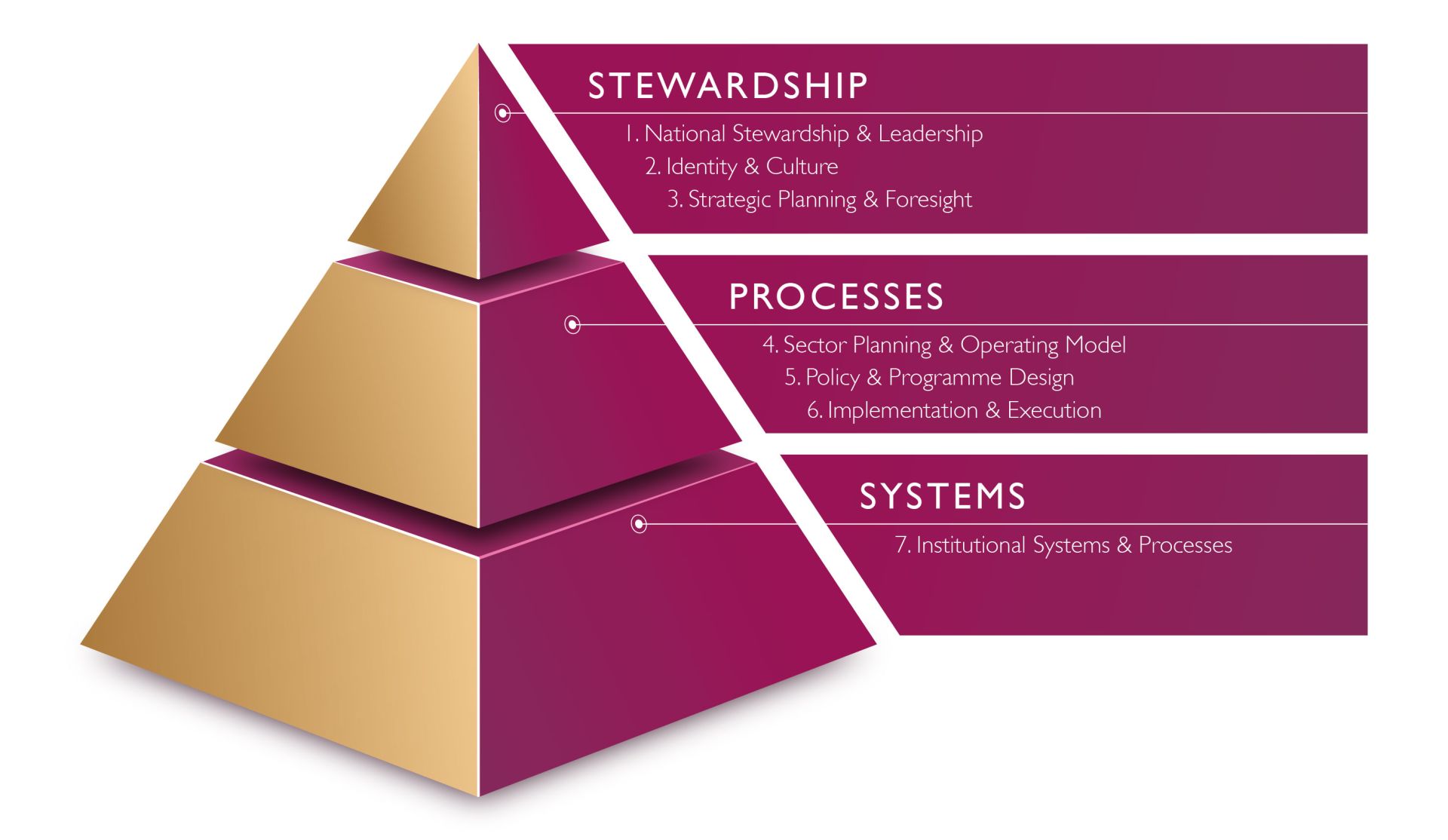
Stewardship focuses on the “why” of governance - cultivating values-driven leadership, national identity, and long-term vision to guide decision-making in the public interest.
1. National Stewardship & Leadership
-
Building High Performance Government
-
Discerning and Stewarding National Story
-
Lessons from History: Rise and Fall of Nations
-
Ethical Decision Making
-
Public Sector Ethos, Values and Stewardship
2. Identity & Culture
-
Developing a National Vision
-
Operating with a Citizen-First Mindset
-
Building Collaborative Cultures in Government
-
Building Cultures of Integrity
-
Anti-corruption: Fundamentals
-
Promoting National Unity in Cultures of Diversity
3. Strategic Planning & Foresight
-
Strategic Planning in the Public Sector
-
Foresight to Strategy
Processes address the “how” – equipping officials with the tools and capabilities to design sound policies, plan effectively across sectors, and deliver programmes with discipline and impact.
4. Sector Planning & Operating Model
-
Public Financial Management
-
ICT and Digital Government
-
Health Sector Planning
-
Fostering a Creative Class: Supporting Entrepreneurship, Innovation, and a Vibrant SME Ecosystem
5. Policy & Programme Design
-
Public Policy Design
-
Designing Policies that Work
-
Design Thinking for Citizen Centric Product and Service Development
6. Implementation & Execution
-
Implementing Successful Public Policy Programmes
-
Addressing Challenges in Programme Implementation
-
Government Communication Strategies
Systems put the spotlight on “what sustains performance” - strengthening institutions, people management, and feedback mechanisms to ensure governments are resilient, adaptive, and able to sustain results over time.
7. Institutional Systems & Processes
-
HR and Performance Management in Government
-
Understanding and Using Public Consultation Platforms
Flexible Training Modalities

Workshops & Seminars

Self-paced Learning

Policy Games

Case Studies

Panel Discussions

Role Play Activities


Chandler Academy of Governance (CAG) is the learning and development division of the Chandler Governance Group (CGG).